
YOGA TEACHER TRAINING SYDNEY
Simple, purposeful, practical, all in-person Yoga Teacher Training for people, who want to teach competently.
starts 14 September 2026— facilitated by Mick Barnes
2 spots left!
This is a fully in-person yoga teacher training based at The Yoga Factory in Annandale, Sydney. It is designed for students who want to understand yoga as a method — not as a performance — and who are prepared to learn how to teach with clarity, responsibility, and consistency.
The training is completed over 12 months and includes a foundational residential immersion week in the Blue Mountains, followed by ongoing weekend intensives in Sydney.
At The Yoga Factory, we practice and teach 8-limb yoga, the path of action, effort, self-study, and devotion. In our times, this type of yoga is commonly referred to as vinyasa yoga. Graduates of our teacher training become 8-limb or vinyasa yoga teachers, who are equipped to teach everyone from beginners to more seasoned students.
This 350hr Yoga Teacher Training is taught in a unique and straightforward way. We all come together and learn how to communicate articulately, economically, and precisely, what it is we practice on the mat. This was how it had been taught in the very beginning of yoga times, but in recent years teacher trainings have moved away from this and are more and more about information and not the practice, about vague spirituality and not the essence of tradition and teaching. Of course, there is a whole lot of textual knowledge that supports the practice but, first and foremost, one needs to understand the asana and how to teach it.
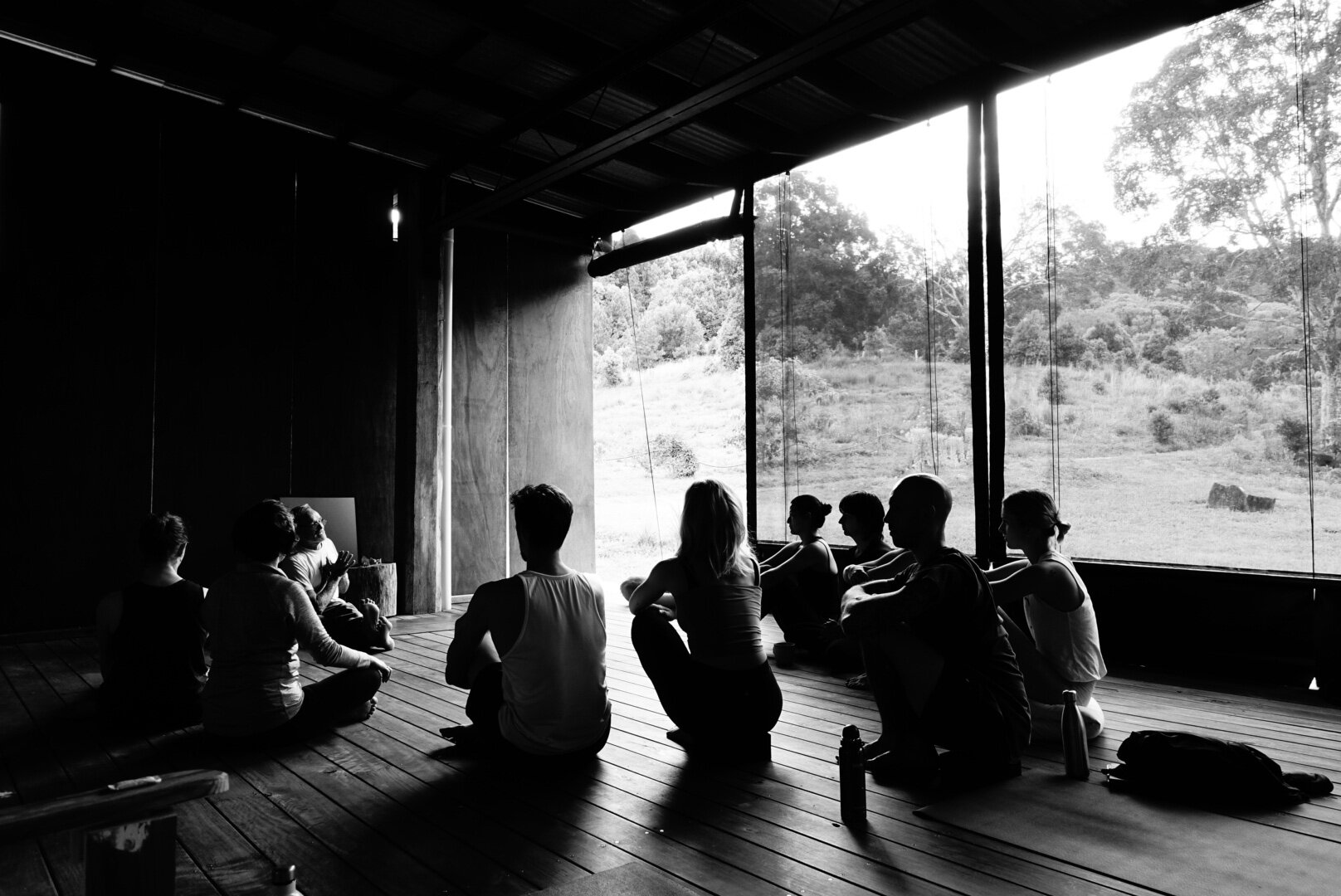
The training runs over 12 months, in person, with enough time to actually digest what you’re learning and to practice teaching in real classes — not just rehearse in theory. We begin with a short residential immersion week. It lets us establish the method properly, so the remainder of the year can be spent refining skill, observing real students, and learning how to make intelligent decisions while teaching.
This Teacher Training will teach you:
Teach with clarity (or slow it down for alignment) without losing the method or breath rhythm
Understand progression (“order of asana”) and what comes next
Sequence intelligently (not randomly for the sake of creativity) and know how to explain why
Take the seat of the teacher and learn the secret to processing, discerning, and informing yourself about who’s in front of you, then teach to them
Modify without diluting the method (inclusive teaching), taking into consideration who is present
Understand functional anatomy well enough to teach safely and adapt to different bodies
Use hands-on assists and adjustments skilfully and appropriately
Deliver instruction clearly: cueing, demonstration, presence
STRUCTURE OF THE TRAINING
This training is taught entirely in person. Trainees work closely with teachers, teach regularly, and receive direct feedback. There are no online modules used to replace contact hours. The emphasis is on learning how to teach responsibly in real-world settings, with real students, over time.
The course has two main components:
Residential Immersion Week (7 nights/ 6 days)
We start with a week away because it’s the most efficient way to learn the foundation properly: long practice, long study sessions, and time to ask better questions than you can ask in a rushed weekend. It also sets the tone for the whole year — shared rhythm, shared language, shared standards.
This week is not a “retreat”. It’s a training intensive: we learn about the method and the blueprint, look into the basics of what it means to be a yoga teacher, start with hands-on assists, and kick off the actual teaching. It will be exactly what the name suggests - an intense immersion into study, both theoretical and practical.
Accommodation is shared and simple. Meals are nourishing and functional. The emphasis is on study and practice.
14 - 21 of September / Leura, Blue Mountains
6 Weekend Intensives — Scheduled throughout the year
After the residential week, we continue with weekend intensives at The Yoga Factory in Annandale. This is where the work becomes more precise: we keep building method and teaching skill, we study key texts, we cover functional anatomy, and we integrate subtle subjects without losing practicality.
Between weekends, trainees also teach, assist, observe, and complete self-study assignments — so the course isn’t “weekend-only learning”. It’s a year of practice and application.
14-15 of November / 12-13 of December / 20-21 of February / 17 - 18 of April / 5-6 of June / 17-18 of July (dates are always re-confirmed in a group chat during the training)
Throughout the year:
Between weekends, trainees also teach, assist, observe, and complete self-study assignments — so the course isn’t “weekend-only learning”. It’s a year of practice and application.
These elements are scheduled with the group and can be worked around if you’re not based in the Inner West. Being at TYF every week is a bonus but not a rigid requirement. What matters is consistency of practice and engagement.
WHY THIS TRAINING IS DIFFERENT
With the saturation of yoga teacher trainings, many courses are now built for speed: condenced hours, thin explanations, and a lot of information delivered without the time to actually practice teaching.
The Yoga Factory Teacher Training is build around real learning conditions.
You practice repeatedly. You teach repeatedly. You receive direct feedback. And you have enough time to absorb what you’re learning, return to it, and refine it in your own body and voice.
We are not training you to perform spirituality. We are training you to teach a method — clearly, responsibly, and in a way that meets the student in front of you.
Because it’s taught entirely in person, you’re not left guessing: you learn through observation, correction, and direct experience, in a room with real teachers and real students.
You make great friends and bond deeply with like-minded people. You can’t do that online. Here, we hold you and nurture you. You actually learn to teach before being let loose in the world. We get to be together and get to know each other. That in itself is beautiful.
Going through the ups and downs of training requires support. It’s not all bells and whistles. For some teacher training is a cathartic experience, so you want and need the support of the facilitator and a group. You’ll get to know Mick and the other facilitators, the teachers and students at the school. You become part of a great community.



TRAINING COST: $5060
This fee includes:
all teaching
residential immersion week (accommodation and meals)
all weekend immersions at The Yoga Factory
Payment plans are available. A $1100 non-refundable deposit is required to secure a place.
2 spots remain!
Please read the Terms and Conditions here.
Who this training is for
This training suits students who:
want a grounded, methodical approach to yoga
are prepared to study over time rather than rush certification
value clarity over spectacle
want to learn how to teach thoughtfully and responsibly
CERTIFICATION:
This is a 350-hour Yoga Teacher Training, accredited with Yoga Australia. Graduates are eligible to register as Level 1 Yoga Teachers (subject to Yoga Australia requirements).
TRAINING MODULES
Techniques / Methodology
These modules are introduced during the residential immersion week, then refined across the Sydney weekends and practicum. We will look into asana, observation, discernment, fundamentals, and lineage. We will also cover class planning and sequencing; ways and means to teach all levels of students; adapting and modifying practices; skilfully using shastra in asana classes; and introduce principles of assisting students energetically and physically.
You will be shown a very safe and adaptable way to teach sun salutations, standing asana, balancing asana, seated postures, arm balances, and inversions. Everything you will learn will have an emphasis on being able to teach inclusively to all levels of students.
All subjects will include theoretical and practical parts.
Yogic Scripture and Chronological Timeline of Yoga
In this module, we will focus on 4 particular sources pertinent to our style and lineage: Upanishads, Bhagavad Gita, Hatha Yoga Pradipika and Patanjali Yoga Sutras.
Anatomy and Physiology
In this module, we will focus on the functional anatomy of asana. A part of it will be dedicated to classic anatomical terms, but more importantly, you will learn to understand movement and how to effectively observe, process and make good decisions whilst teaching asana based on the information you receive.
Functional anatomy and the role breath/prana, bandha, and drishti have, whilst doing asana and pranayama will also be studied.
Lifestyle and Ethics
The important subjects of self-practice, cultural misappropriation, guru culture and authoritarian dynamics in yoga, and how yama and niyama are important aspects of self-development.
Subtle Body
In this module, we will focus on components that make up the energetic systems of our bodies: chakras, nadis, koshas, and vayus. We will not only descriptively cover these subjects but also access a deeper understanding of these terms, through our experience.
Developing a Skill of Teaching / Bringing it All Together
We will have an opportunity to put it all together and practice what we’ve learned. You will begin to get a feel for being a teacher, practice teaching together with other trainees, and later at the TYF school during real-life classes, working through set assignments and exploring variations and different sequences. These opportunities to co-teach with Mick are invaluable so that you gain some confidence in putting it all together.
Continuation of Techniques and Methodology
Focus on pranayama and breathing waves, kriyas, bandhas, mudras and meditation. Learning the skill of energetic and physical assists, exchanging assists with other teacher trainees and TYF teachers.
Starting a Yoga Career
Here we look at how you can get into it and on with it. The pros and cons, the how and why.
Yoga Teacher Training FAQs
-
No. We don’t set a minimum number of years, but we do ask for a consistent practice before you start. If your practice is new or irregular, use the months leading up to the training to build steadiness — that’s what will make the training workable.
-
No. We ask for commitment to a regular practice, but it doesn’t need to be at TYF every week. It’s ideal if you can practice with us when it’s workable — especially around the intensives — but many trainees live further away and keep a consistent practice at home or locally. As long as you can attend the immersion week and weekend intensives, and stay engaged with assignments and teaching practice, it works.
-
You’re expected to attend the immersion week and the weekend intensives in person. If you need to miss a portion due to genuine circumstances, speak with us early — we’ll work out a plan for make-up work where possible.
-
The training isn’t “weekends only.” Between intensives you’ll complete self-study and written work, and — in the second half of the year — teaching assignments. Assist sessions and teaching components are scheduled and can be worked around if you’re not based locally. The aim is steady engagement over time, not weekly attendance at TYF.
-
Yes. Many trainees take the course to deepen understanding, refine practice, and learn how yoga is structured and taught. Teaching components are still part of the training, but the outcome doesn’t need to be a new career.
-
We practice and teach 8 limb yoga. This is essentially what these days is called Vinyasa Yoga. Upon completion of the training you will be skillfully teaching sensible and safe vinyasa classes rooted in tradition and a grounded approach to philosophy and context. We’re not interested in vague spirituality — we’re training you to teach a method.
-
Because learning to teach well takes time.
A longer training allows space to practice, reflect, return to material, and teach real students — not just absorb information quickly. Skills like sequencing, assisting, cueing, and decision-making develop through repetition, not speed.
We’ve chosen a 12-month structure so the work can settle properly, rather than rushing people toward a certificate.
-
Yes. The residential immersion week is included in the total training fee.
We begin the training this way because it allows us to establish the foundations of practice and teaching clearly and efficiently. Accommodation and meals are included. Travel to and from the location is not.
-
Accommodation is shared and simple.
Rooms are typically twin-share or dormitory-style, depending on the venue. The emphasis is on practicality and study rather than comfort or luxury. Meals are nourishing and functional, designed to support daily practice and learning.
-
At TYF, we believe in the practice, and therefore ask you to have a practice before starting this training.
Do not get overwhelmed or intimidated by this requirement. It is, of course, to your benefit if you have been practicing yoga for years, but it does not mean that if you started with it quite recently, you can not embark on your teaching journey.
All we are asking for is an understanding that without a regularity of practice and dedication, yogasana can not be learnt, and certainly can not be taught.
So if you are still new to yoga or have been practicing irregularly, we would suggest you either start or get back into your practice before the teacher training start date
There is plenty of time.
-
You should be familiar with the concept and the practice of yoga.
ABOUT THE FACILITATOR — MICK BARNES
Mick has been teaching yoga for over two decades and training teachers for more than 15 years. His approach is grounded, methodical, and direct, with a strong emphasis on clarity, consistency, and responsibility in teaching.
Rather than focusing on style or performance, Mick teaches yoga as a method — something that can be learned, practiced, and transmitted with care. His teaching prioritises intelligent sequencing, skilful use of breath, hands-on assists, and the ability to adapt practice to real people in real bodies.
In teacher training, Mick is known for his ability to meet students where they are, offer precise feedback, and make complex ideas understandable without over-simplifying them. Trainees are encouraged to ask questions, practise teaching regularly, and develop their own voice within a clear framework.
The Yoga Factory's 350hr Teacher Training has delivered many exceptional students to the industry and Mick's mentees can be found all over the world. They stand out because they actually teach. Their classes are taught with the confidence and safety of a seasoned teacher. They can teach to whoever is in front of them, knowing how to structure the class around the ability of the students and not their class plan from last night or someone else’s class (which they happened to think was nice). Mick's gift is his ability to get teachers and students to believe that if they practice, they can teach. It is just about articulating your experiences and finding your own verbal cues for others to follow.
The emphasis is not on producing copies, but on developing capable, thoughtful teachers who understand what they’re doing and why.
